/f/286255898790625/4899x3266/7e78789205/136396-karlu_karlu__devils_marbles-37.jpg)
On 22 July 2028, day will briefly turn to night as a total solar eclipse crosses Australia, and the Northern Territory’s Barkly Region will be one of the prime places to experience it.
Sitting within the path of totality, locations across the Barkly, including Tennant Creek and Karlu Karlu / Devils Marbles, will experience up to 4 minutes and 57 seconds of total eclipse.
In July you can expect when low humidity and typically clear skies in the Northern Territory, which will create ideal conditions for watching the skies. The Barkly’s vast horizons, open landscapes and remote location make the experience even more spectacular.
The eclipse will occur between approximately 12.45pm and 1pm, high in the sky and close to the middle of the day.
It’s a rare chance to witness one of nature’s most extraordinary events against the ancient landscapes and expansive skies of the Northern Territory.
Stargazing itineraries
/f/286255898790625/af1a19690d/uluru_under_the_night_sky.jpg)
/f/286255898790625/3bffce91e2/uluru_sunrise_northern_territory.jpg)
Stargazing articles
/f/286255898790625/f0c294a861/alicia_and_wade_at_uluru.jpg)
/f/286255898790625/04a34ce30d/man-and-woman-stargazing-at-the-nights-sky-infront-of-uluru_-d-_jpg.jpg)
Unlock Best Kept Season deals
Astronomy tours


Frequently asked questions
-
The Milky Way can be seen at different times throughout the year, but the cooler, drier months generally offer excellent conditions in Central Australia. For darker skies, plan around the new moon and head away from artificial light.
-
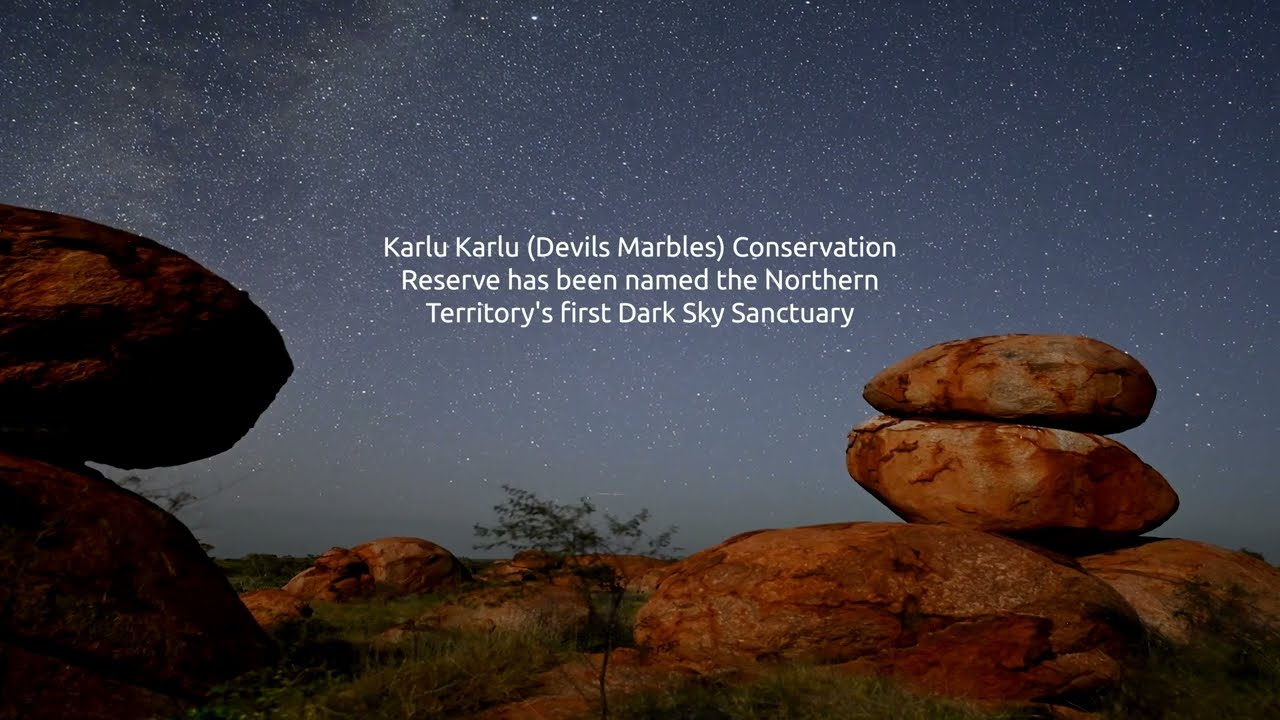
Yes. Karlu Karlu (Devils Marbles) Conservation Reserve is the Northern Territory’s first International Dark Sky Sanctuary, officially designated by DarkSky International in August 2026. It is only the third International Dark Sky Sanctuary in Australia.
Located around 100km south of Tennant Creek in the Barkly region, Karlu Karlu is renowned for its ancient granite boulders, vast landscapes and exceptionally dark night skies. With virtually no light pollution, visitors can experience brilliant stars and spectacular views of the Milky Way above one of the Northern Territory’s most iconic landscapes.
The 1,800-hectare reserve is also a deeply significant cultural landscape for the Kaytetye, Warumungu, Warlpiri and Alyawarra Traditional Owners. Visitors can camp overnight at Karlu Karlu, making it one of the most memorable places to experience stargazing in the Northern Territory.
-
Not at all. Many of the Territory's most impressive night-sky sights can be enjoyed with the naked eye. Telescopes and binoculars reveal even more, while guided experiences can help identify stars, planets and constellations.
-
The Northern Territory is one of Australia’s best destinations for stargazing, thanks to its vast open landscapes, low population density and minimal light pollution. From the clear desert skies of the Red Centre and the internationally recognised dark skies of Karlu Karlu in the Barkly, to the wide horizons of the Top End, there are countless places to experience brilliant stars, constellations and the Milky Way. Across the Territory, remote locations and expansive skies make it easy to escape artificial light and experience the night sky at its most spectacular.